

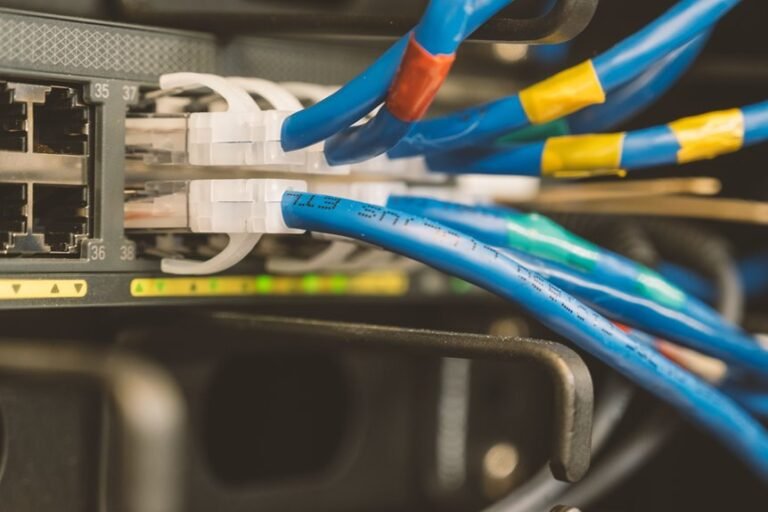
The discussion examines how secure data transfers perform in real pipelines, isolating protocol choice, encryption schemes, and key rotation as distinct factors. It weighs latency against throughput, noting the impact of handshake costs and session reuse. Reliability mechanisms, including retries and integrity checks, are evaluated for their effect on stability and efficiency. The synthesis highlights repeatable benchmarking and principled trade-offs, offering pragmatic guidance that invites further scrutiny and careful implementation.
How Secure Data Transfers Impact Latency and Throughput
Secure data transfers influence both latency and throughput through a combination of cryptographic processing, protocol overhead, and network characteristics.
The analysis adopts a detached tone, emphasizing repeatable measurements and objective criteria.
Security benchmarking informs protocol selection, revealing how cipher suites and handshakes affect timing.
Page-wide consistency is pursued; variability is minimized to enable clear comparisons and principled design decisions for freedom-oriented architectures.
Evaluating Protocols and Encryption: Trade-offs in Real-World Pipelines
Evaluating Protocols and Encryption: Trade-offs in Real-World Pipelines examines how protocol choices and cryptographic schemes shape end-to-end performance in practical data-transfer workflows.
The analysis compares secure channels and plaintext fallback risks, weighing encryption overhead against throughput.
It notes key rotation cadence, protocol negotiation efficiency, and session resumption impacts, offering methodical guidance for balancing security posture with operational freedom.
Measuring Reliability: Error Handling, Retries, and Integrity Checks
Measuring reliability in secure data transfers centers on the mechanisms that detect, report, and recover from errors across the network and endpoints. The analysis investigates error handling, retries, and integrity checks, linking latency throughput with protocol evaluation. It weighs encryption trade offs, security guidelines, and tuning speed, offering a precise framework for assessing resilience without sacrificing performance or freedom.
Tuning for Speed Without Sacrificing Security: Best Practices and Practical Guidelines
How can organizations optimize data transfers to maximize speed without compromising security? The analysis outlines a disciplined approach: balance latency, bandwidth, and protection layers; adopt streamlined auth to reduce friction while preserving strong identity verification; implement proactive key rotation to minimize risk without slowing handshakes; benchmark configurations; apply incremental upgrades; monitor outcomes; document repeatable, secure practices.
Frequently Asked Questions
How Do Regulatory Changes Impact Secure Transfer Latency?
Regulatory changes generally increase secure transfer latency through compliance delays, documentation reviews, and audit cycles; consequently, regulatory latency rises as organizations implement controls, while aligned efficiency improvements may mitigate some impact during phased adaptations, bandwidth decisions, and governance adjustments.
Can User Behavior Degrade Encryption Performance Unexpectedly?
User behavior can degrade encryption, causing unexpected performance. The analysis indicates that operational patterns—bursts, concurrent sessions, and improper key management—introduce variability, requiring robust monitoring and adaptive controls to maintain consistent secure data transfers.
What Are Cost Implications of Crypto Acceleration Hardware?
Crypto hardware offers acceleration costs that must be weighed against regulatory latency and interoperability gaps; while encryption performance improves, geo distributed security and user behavior influence scalability, increasing total cost, potential interop friction, and required governance around crypto hardware deployment.
Do New Crypto Standards Introduce Interoperability Gaps?
New standards may yield interoperability gaps, as latency impact and encryption performance vary; regulatory changes and user behavior influence adoption, while acceleration hardware and geo distributed nodes shape interoperability, balancing secure data transfers against evolving encryption, latency, and performance expectations.
How Do Geo-Distributed Nodes Affect End-To-End Security?
Geo distribution complicates end to end security through latency impact and encryption performance, while regulatory changes and standards interoperability shape crypto acceleration and new crypto guidelines; behavior impact and hardware costs influence overall security posture and optimization tradeoffs.
Conclusion
The study concludes with a precise, methodical assessment of secure data transfers, emphasizing measured trade-offs, repeatable benchmarking, and principled choices. Protocol selection, encryption strength, and key rotation are weighed against latency, throughput, and reliability. Observed gains from optimized handshakes and prudent retry strategies are quantified, while safeguards against plaintext risk remain essential. The analysis recommends disciplined tuning, consistent metrics, and incremental improvements, all aimed at preserving security without unduly constraining operational velocity or bandwidth efficiency.